
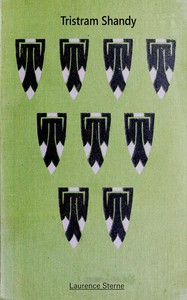
Das Leben und die Meinungen von Herrn Tristram Shandy by Laurence Sterne
So, you want to know what Tristram Shandy is about? Good luck. The narrator, Tristram, promises us his autobiography. But he's the most distractible man in literary history. He starts with the moment of his conception, gets sidetracked by his father's strange theories about names and noses, spends chapters on his Uncle Toby's war wound and his resulting hobby of staging tiny battles on a lawn fort, and digresses into sermons, legal documents, and philosophical musings. The plot, such as it is, is constantly interrupted. Major life events are skipped over, while minor details are examined under a microscope. By the end of the book, Tristram is barely out of childhood. The story isn't in the events; it's in the telling.
Why You Should Read It
This book is a joy because it feels so modern and so human. It’s not about what happens; it’s about how we think, how we remember, and how we fail to communicate. Sterne understands that our minds are messy. We don't think in orderly chapters. We jump from a memory of our uncle to a joke we heard yesterday to a deep worry about life. Tristram's struggle to get his story out is everyone's struggle to make sense of their own life. The characters are unforgettable—especially Uncle Toby, who is one of the kindest, most innocent souls in fiction, obsessed with his miniature battlefields. The book is also physically funny, with its odd typography, missing chapters, and silly diagrams. It’s a conversation with the reader, full of winks and nudges.
Final Verdict
This is not a book for someone who wants a fast-paced, plot-driven thriller. It’s for the curious reader, the person who loves to play with ideas and form. It’s perfect for fans of modern, experimental fiction who want to see where it all began. If you enjoy writers who break the rules, like Kurt Vonnegut or George Saunders, you’ll find their 18th-century grandfather in Laurence Sterne. You need patience and a sense of humor. Approach it like a weird, rambling conversation with a brilliant, eccentric friend. Don't try to 'solve' it; just enjoy the ride. You’ll either throw it across the room in the first 50 pages or absolutely fall in love with its chaotic genius.
This title is part of the public domain archive. You are welcome to share this with anyone.
Nancy Martin
1 month agoLooking at the bibliography alone, the inclusion of diverse viewpoints strengthens the overall narrative. It cleared up a lot of the confusion I had previously.
Brian Sanchez
1 year agoFrom the very first page, the flow of the text seems very fluid. Exceeded all my expectations.




Patricia Moore
2 months agoI was particularly interested in the case studies mentioned here, the narrative arc keeps the reader engaged while delivering factual content. I'll be citing this in my upcoming project.