
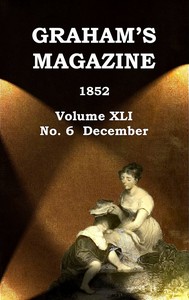
Graham's Magazine, Vol. XLI, No. 6, December 1852 by Various
Let's be clear: this isn't a novel. Graham's Magazine from December 1852 is a snapshot. Picture the best literary magazine of its day, frozen in time. You open it and are immediately hit with the table of contents—a chaotic blend of fiction, poetry, essays, and even music sheets. There's no single author's voice guiding you; instead, you hop from the mind of a suspense writer to a melancholic poet to a political commentator, all within a few pages.
The Story
There isn't one story, but many. A standout is often a piece of serialized fiction, maybe a mystery set in a vividly described city where every shadow holds a secret. Right next to it, a poem uses simple language to explore a deep, personal grief. Then, flipping the page, you crash into a long essay debating states' rights, technology, or the role of women, written with fiery conviction. The 'plot' of the magazine is the experience of moving through these different worlds. It shows you what entertained people, what worried them, and what they considered beautiful, all without a filter.
Why You Should Read It
I loved this because it felt authentic. History can sometimes feel polished and distant. This feels messy and immediate. You're not being told about 1850s culture; you're swimming in it. The fiction is dramatic and full of feeling, the ads are hilarious and strange, and the essays reveal the heated debates simmering under the surface of polite society. It’s fascinating to see which concerns feel dated and which—like anxieties about change or longing for connection—feel like they could have been written yesterday. The characters in the stories are archetypes of their time, which makes them perfect windows into the era's hopes and fears.
Final Verdict
This is perfect for curious readers who love history but hate dry textbooks. It's for the person who enjoys anthologies, short stories, or the weird charm of primary sources. If you like the idea of literary time travel—of spending an afternoon in the parlor of 1852—you'll find this completely absorbing. It's not a page-turning thriller, but a slow, rich browse through a lost world. Just be ready for the occasional dense paragraph; they were really into their long sentences back then!
This book is widely considered to be in the public domain. Distribute this work to help spread literacy.
Linda Martin
1 year agoUnlike many other resources I've purchased before, the language used is precise without being overly academic or confusing. Finally, a source that prioritizes accuracy over hype.
Brian Young
1 year agoMy professor recommended this, and I see why.
Steven Flores
1 year agoSimply put, the storytelling feels authentic and emotionally grounded. One of the best books I've read this year.
Barbara Martin
3 months agoI was particularly interested in the case studies mentioned here, the breakdown of complex theories into digestible segments is masterfully done. An excellent example of how quality digital books should be formatted.