
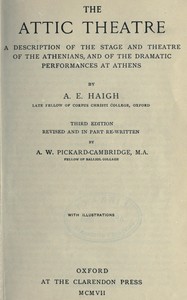
The Attic theatre : a description of the stage and theatre of the Athenians,…
So, what's this book actually about? 'The Attic Theatre' is a deep, detailed reconstruction of what it was really like to put on a play in ancient Athens. Forget the massive stone ruins you might picture. Haigh builds his case that the original Theatre of Dionysus was a simpler, wooden structure built on the slope of the Acropolis. He walks you through everything: the shape and size of the orchestra (the dancing floor for the chorus), the layout of the wooden stage building (skēnē), and how actors used masks and elevated boots to be seen. He explains the practicalities—how scene changes might have worked, where the audience sat, and how the whole event was part of a religious festival. It’s less about listing dates and more about painting a functional picture of a creative machine.
Why You Should Read It
Here’s the thing: this book makes those ancient plays feel alive. Reading it, you stop seeing them as stiff, formal texts and start seeing them as live productions with real constraints and clever solutions. Haigh connects the physical space directly to the drama. Why are there long messenger speeches describing off-stage violence? Because showing it on that simple stage was tricky. How did the chorus function? They were literally in the middle of the action, in the orchestra. This perspective adds a whole new layer of meaning. It’s for anyone who loves theatre and has ever asked, 'But how did they actually do that?' Haigh gives you the answers, grounding the poetry in the sawdust and paint of backstage life.
Final Verdict
This is a specialist book, but its appeal is broader than you might think. It’s perfect for history buffs and theatre students, of course, who want to move beyond the basics. But I’d also strongly recommend it to any curious reader of Greek tragedies and comedies. If you enjoy the works of Aeschylus or Aristophanes, this book is like getting a backstage pass to their original productions. It provides the context that makes those classic works snap into focus. A word of caution: it’s an old, academic text, so the writing can be dense in spots. But the insights are so rewarding. Think of it as the essential, behind-the-scenes documentary for the greatest plays ever written.
This masterpiece is free from copyright limitations. Distribute this work to help spread literacy.
Susan Sanchez
9 months agoA must-have for anyone studying this subject.
Donald Flores
8 months agoSimply put, the character development leaves a lasting impact. Definitely a 5-star read.
Betty Williams
5 months agoIf you enjoy this genre, the plot twists are genuinely surprising. Exceeded all my expectations.
Sarah Hill
5 months agoHaving read this twice, it provides a comprehensive overview perfect for everyone. Thanks for sharing this review.

Paul Anderson
6 months agoRead this on my tablet, looks great.