About 23 minutes
The Gold Horns — Context and Discussion
Adventure Picaresque Fiction
5,239 recorded words. 3 minutes difference from this book's estimate.
View Gutenberg source #29124
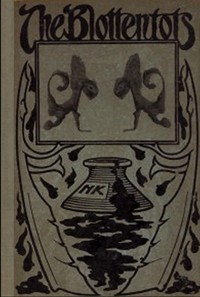
For Blottentots, and How to Make Them — Text and Context, the stored edition analysis reports 4,441 words, 20 min estimated reading time, and 1 detected text section.
The text analysis averages about 22.3 words per sentence, while the detected sections provide another way to judge how the source is divided.
Project Gutenberg metadata also associates the work with “Poetry,” connecting these edition facts with the source record’s subject description.
Explore this collection
These alternatives are selected using recorded categories and estimated reading time.
About 23 minutes
Adventure Picaresque Fiction
5,239 recorded words. 3 minutes difference from this book's estimate.
View Gutenberg source #29124About 25 minutes
Adventure Picaresque Fiction
5,673 recorded words. 5 minutes difference from this book's estimate.
View Gutenberg source #41615About 29 minutes
Adventure Picaresque Fiction
6,538 recorded words. 9 minutes difference from this book's estimate.
View Gutenberg source #32445Search stored excerpts and compare books → Choose by your preferences →
Choices use stored catalog measurements. Estimates vary with reading speed. A shared category is a catalog label, not a claim that two books have the same argument or literary quality.
Search reads excerpt text stored with this catalog and links to its associated Gutenberg record. The connection is stored in the site database; this tool does not recheck that every excerpt is word-for-word identical to that external record. Excerpt search does not cover every chapter and does not verify historical publication dates.
Catalog snapshot checked: 2026-09-26. Coverage: 90 public books, 90 available source excerpts.
Calculated from edition completeness, EPUB availability, text structure and catalogue metadata. Not a user rating.
Total of 100 points, scaled to a 2.5-5.0 range. Editions with an empty description or a missing EPUB file are not scored.
Public-domain source text
The source text is kept in the dedicated reader, separate from this catalogue record and its commentary.
John Prosper Carmel's Blottentots, and How to Make Them (1907) opens with a declaration of royal ink-blot lineage: “O, I AM PRINCE OF THE INKY IMPS AND KING OF THE BLOTTENTOT CREW.” This boastful, rhyming voice immediately establishes the book’s hybrid nature—part instruction manual, part whimsical verse collection. The author presents himself as a buccaneer born from a creased ink spot, inviting readers to replicate his process. Yet the text quickly reveals that the real delight lies not in the technique but in the characters that emerge: Flitter-Flitter-Flitters, Gobble-Me-Up, and two bucking nightmares who “took to their heels in sore dismay.” Carmel’s diction oscillates between practical advice (“crease, press, but cut no caper”) and fantastical description, creating a tone that is both teacherly and mischievous.
The opening instructions are delivered in a tight, sing-song meter: “To make a funny Blottentot, / First take a piece of paper, / Splash on some ink, a single spot, / Crease, press, but cut no caper.” Carmel warns against creasing “exactly at the blot” and pressing too hard, lest you create “a fearful muddle” or “a puddle.” These lines are not merely functional; they embed the craft lesson within a playful, rhythmic structure that mirrors the unpredictability of the process. The author acknowledges that practice makes “apter,” but the emphasis remains on the joy of accident. The instructional voice is direct yet light, treating the reader as a co-conspirator in ink-blot mischief rather than a passive learner.
Carmel populates his pages with a menagerie of creatures, each introduced through a short, character-driven poem. The “Flitter-Flitter-Flitters” are described as “the lightest, brightest critters” that “flitter, flutter round about” in “realms of wonderland.” In contrast, the “Gobble-Me-Up” is “weedy, greedy,” with a mouth of “fearful size,” and the poem playfully asks whether it eats “little girls and boys, / Or merely cakes and pies.” The “Two Bucking Nightmares” are given a brief narrative: they “ran out to neigh, / Thinking it night, but found it day.” These vignettes are economical, often no more than four lines, yet they establish distinct personalities through exaggerated physical traits and absurd situations. The author’s diction favors alliteration and internal rhyme, as in “Teeny and Tiny Pugnoses” who “have discovered two beautiful roses.”
Among the fantastical figures, Carmel inserts a surprising historical cameo: “Mistress Nell” is addressed as “Gadzooks, Nell Gwynne! How did you get in?” The poem notes her “stomacher, quilting and hair,” grounding the ink-blot in Restoration-era fashion. This juxtaposition of historical specificity with the random nature of ink-blot creation underscores Carmel’s playful approach to genre. Elsewhere, “Law-Makers” Tom and Johnny “Make-the-law” are described as “talkative and lazy, / Standing on a Thingumajig / Comical and crazy.” The nonsense word “Thingumajig” and the limping single-leg detail reinforce the absurdity. A “Professional Tiff” between Dr. Spindleshanks and Dr. Funnywig ends with each making a face and departing, a miniature drama that relies on caricature rather than plot.
Carmel directly addresses the role of chance in the poem “Strange But True,” where he marvels that “such a strange grotesquerie / Was pressed from a drop of ink.” He insists that “in its making there was naught / But the blindest chancerie.” This acknowledgment of randomness is central to the book’s aesthetic: the author does not claim mastery over the process but rather celebrates the unpredictable outcomes. The closing lines of the instructional section reinforce this: “With everything we humans do, / Practice makes us apter: / So start at once, you’ll find it true / At the end of your first chapter.” The voice remains encouraging yet honest, never promising perfect results but rather the pleasure of discovery.
Carmel’s Blottentots rewards readers who approach it as both a craft guide and a collection of miniature nonsense poems. The brevity of each entry invites repeated reading, and the interplay between instruction and imagination suggests that the true subject is not the technique but the creatures that chance and crease produce. Readers may find it useful to try the method themselves, letting the ink guide the invention, just as Carmel’s verses do.
Sometimes, between the shelves, I recall the gentle twilight of Blottentots—those puddled beasts made from ink and patience. There is a similar fondness for quiet craft in Outlook Odes — Inside the Classic; both whisper of the joy in making something whole from scattered parts. A secret companionship, that.
Answer a few questions and save a private reflection on this device.