About 55 minutes
Cornish Catches, and Other Verses — Edition Insights
Science Fiction Utopias
12,504 recorded words. 0 minutes difference from this book's estimate.
View Gutenberg source #38565
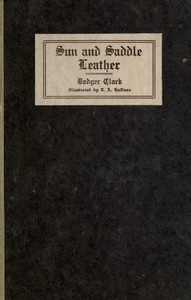
For Sun and Saddle Leather — Reading Companion, the stored edition analysis reports 12,424 words, 55 min estimated reading time, and 3 detected text sections.
The text analysis averages about 22.8 words per sentence, while the detected sections provide another way to judge how the source is divided.
Project Gutenberg metadata also associates the work with “Cowboys -- Poetry,” connecting these edition facts with the source record’s subject description.
Explore this collection
These alternatives are selected using recorded categories and estimated reading time.
About 55 minutes
Science Fiction Utopias
12,504 recorded words. 0 minutes difference from this book's estimate.
View Gutenberg source #38565About 54 minutes
Science Fiction Utopias
12,250 recorded words. 1 minutes difference from this book's estimate.
View Gutenberg source #55921About 50 minutes
Science Fiction Utopias
11,355 recorded words. 5 minutes difference from this book's estimate.
View Gutenberg source #30730Search stored excerpts and compare books → Choose by your preferences →
Choices use stored catalog measurements. Estimates vary with reading speed. A shared category is a catalog label, not a claim that two books have the same argument or literary quality.
Search reads excerpt text stored with this catalog and links to its associated Gutenberg record. The connection is stored in the site database; this tool does not recheck that every excerpt is word-for-word identical to that external record. Excerpt search does not cover every chapter and does not verify historical publication dates.
Catalog snapshot checked: 2026-09-26. Coverage: 90 public books, 90 available source excerpts.
Calculated from edition completeness, EPUB availability, text structure and catalogue metadata. Not a user rating.
Total of 100 points, scaled to a 2.5-5.0 range. Editions with an empty description or a missing EPUB file are not scored.
Public-domain source text
The source text is kept in the dedicated reader, separate from this catalogue record and its commentary.
Badger Clark's Sun and Saddle Leather opens with a prefatory poem that addresses the West as a 'young, young land,' setting a tone of affectionate regret for a fading frontier. The third-edition preface reports that cowboys themselves adopted Clark's poems as folk songs, praising their authenticity: 'I don't know how he knowed, but he knows.' The excerpts reveal a poet who favors dramatic monologues in dialect, with a strong rhythmic pulse and a wry, self-deprecating humor. Clark's speaker often boasts, then undercuts himself, as in 'The Glory Trail,' where High-Chin Bob's pursuit of a mountain lion becomes a comic ordeal of stubborn pride.
Clark's poems are built around a first-person speaker who addresses the reader directly, using cowboy dialect and a colloquial, often humorous tone. In 'The Glory Trail,' the narrator recounts High-Chin Bob's ill-advised attempt to rope a mountain lion, with lines like 'Oh, glory be to me,' says he, / 'And fame's unfadin' flowers!' The dialect is consistent: 'top-hawse' for top horse, 'kaint' for can't, 'holler: Nuff!' The poems often feel like tall tales told around a campfire, with the speaker's bravado gradually deflated by events. 'Bacon' is a mock-heroic ode to a humble staple, using apostrophe and a catalog of hardships: 'You froze with us up on the Laramie trail; / You sweat with us down at Tucson.' The voice is intimate, as if the speaker is confiding in a fellow cowboy.
Several poems in the excerpts share a preoccupation with masculine pride and its consequences. In 'The Glory Trail,' Bob's refusal to release the lion—'I'll never turn him loose!'—becomes a point of honor, even as he weakens. 'The Lost Pardner' shows a different side: grief that isolates the speaker, who 'ride alone and hate the boys I meet.' The landscape itself is a constant presence, often personified or used as a backdrop for action. Clark's West is not romanticized; it is a place of hard work, bacon grease, and 'whippin' brush and rattlin' stones.' The poems balance affection for the land with clear-eyed acknowledgment of its dangers and discomforts.
Clark favors traditional ballad stanzas with alternating rhyme, often incorporating a refrain that reinforces the poem's central idea. 'The Glory Trail' uses a four-line refrain beginning 'Oh, glory be to me,' which shifts from boastful to weary as the poem progresses. 'Bacon' employs a more complex pattern: a six-line stanza with a couplet refrain ('Here's to you, old bacon...'). The poems are designed to be sung or recited aloud, with strong end-stops and a clear narrative arc. 'The Lost Pardner' breaks this pattern slightly, using shorter lines and a more somber tone, but still maintains a regular meter. Clark's control of rhythm is evident even in the excerpts; he varies line length for emphasis, as in the punchy 'They don't. They never cry nor scold.'
The digital edition includes photographs by L. A. Huffman, a noted Western photographer. While the excerpts do not reproduce the images, the title page credits Huffman as illustrator, and the preface mentions that the poems have become 'folk songs of the West.' The physical book's third edition (1919) suggests the collection's popularity. Readers should note that the poems were originally published with accompanying photographs, which likely contextualize the landscapes and figures described. The digital text preserves the original pagination and front matter, including the dedication to Clark's father. The presence of Huffman's work underscores the documentary impulse behind the collection: Clark's poems aim to record a way of life, even as they acknowledge its passing.
These excerpts offer a representative sample of Clark's range, from comic bravado to elegiac solitude. Readers approaching the full collection will find a consistent voice and a coherent worldview, but also variety in tone and subject. The poems reward reading aloud, and the dialect, while initially challenging, quickly becomes familiar. Pay attention to how Clark uses the refrain to build tension or underscore a theme. The photographs, though not included here, were integral to the original book; seeking them out may enrich the reading experience.
Sometimes a voice stays with you long after the page closes, the way Badger Clark's dry, warm humor does in Sun and Saddle Leather—that quiet ache beneath the swagger. I found a similar lingering in Wine, Water, and Song — Key Ideas to Explore, where the songs feel less like verses and more like old friends recalling a long night. It hums softly, like a remembered tune.
Your answers remain private and are stored only in this browser.