About 55 minutes
Sun and Saddle Leather — Reading Companion
Science Fiction Utopias
12,424 recorded words. 1 minutes difference from this book's estimate.
View Gutenberg source #36770
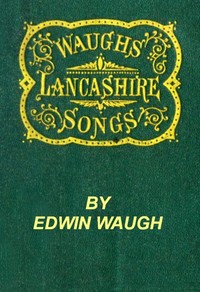
For Lancashire Songs — A Reader’s Guide, the stored edition analysis reports 12,250 words, 54 min estimated reading time, and 26 detected text sections.
The text analysis averages about 29.0 words per sentence, while the detected sections provide another way to judge how the source is divided.
Project Gutenberg metadata also associates the work with “English poetry -- 19th century,” connecting these edition facts with the source record’s subject description.
Explore this collection
These alternatives are selected using recorded categories and estimated reading time.
About 55 minutes
Science Fiction Utopias
12,424 recorded words. 1 minutes difference from this book's estimate.
View Gutenberg source #36770About 55 minutes
Science Fiction Utopias
12,504 recorded words. 1 minutes difference from this book's estimate.
View Gutenberg source #38565About 50 minutes
Science Fiction Utopias
11,355 recorded words. 4 minutes difference from this book's estimate.
View Gutenberg source #30730Search stored excerpts and compare books → Choose by your preferences →
Choices use stored catalog measurements. Estimates vary with reading speed. A shared category is a catalog label, not a claim that two books have the same argument or literary quality.
Search reads excerpt text stored with this catalog and links to its associated Gutenberg record. The connection is stored in the site database; this tool does not recheck that every excerpt is word-for-word identical to that external record. Excerpt search does not cover every chapter and does not verify historical publication dates.
Catalog snapshot checked: 2026-09-26. Coverage: 90 public books, 90 available source excerpts.
Calculated from edition completeness, EPUB availability, text structure and catalogue metadata. Not a user rating.
Total of 100 points, scaled to a 2.5-5.0 range. Editions with an empty description or a missing EPUB file are not scored.
Public-domain source text
The source text is kept in the dedicated reader, separate from this catalogue record and its commentary.
Edwin Waugh’s Lancashire Songs (1866) opens with a domestic plea in “Come whoam to thi childer an’ me,” where a wife’s voice mixes homely details—mended fire, new shoes, bacon collops—with the children’s longing for their father. The poem’s shift from the wife’s monologue to the husband’s reply, promising gifts and a return, establishes a pattern of alternating perspectives that runs through the collection. Waugh’s dialect is not merely decorative; it shapes the rhythm and intimacy of each piece, from the lullaby-like “What ails thee, my son Robin?” to the brisk narrative of “Gentle Jone.” The songs move between private emotion and communal observation, often within a single stanza.
Several poems in the collection rely on a single speaker addressing an absent listener, creating an intimate, almost epistolary feel. In “Come whoam to thi childer an’ me,” the wife’s voice dominates the first half, detailing her chores and the children’s tears, before the husband’s reply in the final stanza reverses the dynamic. “What ails thee, my son Robin?” uses a mother’s worried questions to frame the son’s unspoken sorrow, while “Come, Mary, link thi arm i’ mine” shifts to a lover’s direct address. This technique gives each poem a dramatic core: the reader overhears a conversation, not a monologue. Waugh varies the pace by inserting narrative interruptions—a child’s cry, a knock at the door—that break the lyrical flow and ground the emotion in everyday action.
Waugh’s Lancashire dialect is not uniform; it adapts to the mood of each song. In “Th’ sweetheart gate,” the repeated phrase “gate” (way) and the gentle rhythm of “rindlin’ wayter” and “posied lea” create a pastoral lilt. By contrast, “Gentle Jone” uses a more conversational, anecdotal tone, with the narrator’s interjections (“Owd lad,” said I) and the old man’s halting speech. The dialect also affects the poems’ pace: contractions like “aw’ve,” “thae’d,” and “hoo” compress syllables, quickening the line, while longer dialect words (“maunderin’,” “crayter”) slow it down. Waugh often pairs dialect with traditional airs indicated in the titles, such as “The Manchester Angel” or “Jenny’s Bawbee,” suggesting the poems were meant to be sung, their linguistic quirks matching the tune’s rise and fall.
The collection alternates between short, song-like lyrics and longer narrative pieces. “Neet-fo’” (nightfall) is a brief, atmospheric poem where the wind and thorn set a somber scene, its pace slow and repetitive. In contrast, “Tum Rindle” and “Owd Pinder” unfold as stories with multiple characters and dialogue, moving at a brisk, anecdotal speed. Waugh often signals a change in pace through punctuation: dashes and exclamations in “Chirrup” create urgency, while the measured lines of “God bless these poor folk!” slow the reader with repeated blessings. The effect is a varied reading experience that mirrors the oral tradition from which these songs spring—sometimes a quick tale told over a pipe, sometimes a lingering lament.
Readers approaching Lancashire Songs should attend to the interplay between the printed text and its implied musical settings. The dialect rewards reading aloud, where its rhythms and elisions become clear. Waugh’s work is best experienced not as a single narrative but as a sequence of distinct voices, each with its own tempo and emotional register. The collection’s brevity—fifty-four minutes of reading—invites repeated visits to individual poems, allowing their linguistic and structural details to emerge over time.
There’s a particular ache in Waugh’s Lancashire songs—that pull between a warm hearth and the wide moor. It reminded me, strangely, of thumbing through old glossaries, trying to hold onto words that slip. That same quiet longing for a shared language lives in Chaucer's Works, Volume 6 — Introduction, Glossary, and Indexes — Context and Discussion. Both are ways of keeping a voice close, even when the world moves on.
Answer a few questions and save a private reflection on this device.