About 27 minutes
Splores of a Halloween, Twenty Years Ago — A Closer Reading
Science Fiction Utopias
6,002 recorded words. 0 minutes difference from this book's estimate.
View Gutenberg source #34780
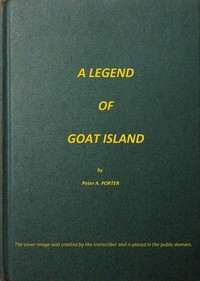
This digital edition of A Legend of Goat Island — A Reader’s Guide is described by source-level measurements including 6,201 words, 27 min estimated reading time, and 1 detected text section.
The text analysis averages about 26.1 words per sentence, while the detected sections provide another way to judge how the source is divided.
Project Gutenberg metadata also associates the work with “Hennepin, Louis, active 17th century -- Poetry,” connecting these edition facts with the source record’s subject description.
Explore this collection
These alternatives are selected using recorded categories and estimated reading time.
About 27 minutes
Science Fiction Utopias
6,002 recorded words. 0 minutes difference from this book's estimate.
View Gutenberg source #34780About 31 minutes
Science Fiction Utopias
7,043 recorded words. 4 minutes difference from this book's estimate.
View Gutenberg source #35115About 21 minutes
Science Fiction Utopias
4,602 recorded words. 6 minutes difference from this book's estimate.
View Gutenberg source #45066Search stored excerpts and compare books → Choose by your preferences →
Choices use stored catalog measurements. Estimates vary with reading speed. A shared category is a catalog label, not a claim that two books have the same argument or literary quality.
Search reads excerpt text stored with this catalog and links to its associated Gutenberg record. The connection is stored in the site database; this tool does not recheck that every excerpt is word-for-word identical to that external record. Excerpt search does not cover every chapter and does not verify historical publication dates.
Catalog snapshot checked: 2026-09-26. Coverage: 90 public books, 90 available source excerpts.
Calculated from edition completeness, EPUB availability, text structure and catalogue metadata. Not a user rating.
Total of 100 points, scaled to a 2.5-5.0 range. Editions with an empty description or a missing EPUB file are not scored.
Public-domain source text
The source text is kept in the dedicated reader, separate from this catalogue record and its commentary.
The poem opens with a precise geographical and cultural setting: the Neuter tribe's village on the western bank of the Niagara River, above the rapids. The stranger—a priest in a 'long loose robe of reddish brown'—arrives at evening, his 'hoary locks and silvery beard' marking him as alien. The verse immediately establishes a tension between the tribe's silent, prideful warriors and the priest's patient, didactic mission. The narrator frames the story as a 'dim tradition of the race,' signaling that this is a retelling of oral legend, not a firsthand account.
The author, Peter A. Porter, uses a consistent meter and rhyme scheme (predominantly iambic tetrameter with couplets) that gives the narrative a ballad-like quality. The diction is deliberately archaic—'whence,' 'thee,' 'thou'—and the descriptions of the falls emphasize sound: 'that dull, reverberating sound / That seemed to shake the very ground.' This aural detail recurs, anchoring the supernatural or spiritual encounter in a specific, natural phenomenon.
The poem lingers on the priest's physical details: his 'Sacred Order's gown,' the rope 'around his waist,' and the rosary 'hanging loose and free.' These objects are described with a catalog-like precision, as if the narrator is itemizing evidence. The priest's speech is rendered in indirect discourse—'he said his errand was to teach / The glories of the Life to be'—but the poem never quotes him directly. Instead, the narrator reports that he 'spake in Indian speech,' having learned it from other tribes. This choice keeps the priest's voice mediated, emphasizing the cultural gap.
The warriors' reaction is one of 'silent wonderment' and 'reverend awe,' but also sullenness. They allow him to share their fire and food, but 'little cared they what befell / Their souls, so they but feasted well.' The poem thus sets up a contrast between the priest's spiritual urgency and the tribe's material concerns, a tension that drives the narrative forward.
The priest's first question to the tribe is about the 'endless thunder'—the sound of Niagara. The chief's response is a command: 'Be patient, you shall see.' This exchange positions the falls as both a physical landmark and a symbol of the unknown. The poem repeatedly references the sound: 'that dull, reverberating sound' and later 'the roar of the cataract.' The falls are never fully described visually in the excerpts; instead, their presence is felt through sound and through the island that 'divides / Niagara's tumultuous tides.'
This aural focus is a deliberate authorial choice. By emphasizing what is heard rather than seen, the poem creates a sense of awe and mystery. The falls become a character in the legend, a constant backdrop that shapes the action. The priest's mission is literally grounded in this geography: the island is where the conversion takes place, and the spray-cloud serves as a 'Baldachin'—a ceremonial canopy—over the baptism.
The climax of the excerpted text is the baptism of the chief. The priest 'dipped his hand in the wave' and poured water on the chief's head, saying 'Your soul I hereby save.' The poem then describes the chief kneeling and receiving the sign of the cross. The language is liturgical: 'First convert of the Neuter race,' 'the Cross's holy sign,' 'the Faith you have confessed.' The chief's conversion is presented as a personal act, but it is also a public spectacle, witnessed by the warriors who arrive by canoe.
The poem notes that the warriors 'stepped to the Chieftain's side' and stood 'in awe-felt silence.' The priest feels 'holy pride' at the sight of this 'converted warrior band.' The scene is framed as a triumph, but the poem does not explore the chief's internal motives or doubts. The conversion is described entirely from the priest's perspective, reinforcing the poem's focus on the missionary's experience rather than the tribe's.
The poem is told in the third person, but the narrator's voice is not omniscient. The narrative is confined to what the priest sees and hears, and to the external actions of the tribe. The warriors' thoughts are only inferred: they 'listened most attentively' or 'stood in awe-felt silence.' The poem never enters the mind of any character. This limited point of view creates a sense of distance, as if the reader is observing the events from the same vantage point as the narrator.
The verse form—rhyming couplets with a regular meter—adds to this sense of control. The poem's structure is formal and predictable, mirroring the priest's orderly mission. The only break in the pattern is the occasional use of a longer line or a different rhyme scheme, which may signal shifts in tone or action. The poem's brevity (6,201 words) and its status as a 'legend' suggest that it is meant to be a single, self-contained episode, not a comprehensive history.
Readers should approach this poem as a period piece that reflects late-19th-century attitudes toward missionary work and Native American cultures. The author, Peter A. Porter, was a local historian and lawyer, and the poem was privately printed in a limited edition of 100 copies. The illustrations by Cabell Breckinridge Porter are not included in this digital edition, but the text itself offers a compact example of how verse was used to memorialize regional folklore. Pay attention to the way the poem balances religious language with landscape description, and consider how the choice of a European missionary as the central figure shapes the story's perspective.
Reading the priest’s robe beside the falls, I remembered a winter afternoon with the old Vision of Piers Ploughman. Both books carry that same patient hush—the way a habit or a dream can hold a person steady against a world’s noise. Mine had a frayed bookmark, and I still feel the calm it left. The Vision and Creed of Piers Ploughman, Volume 1 — A Closer Reading sits oddly close to that memory.
Answer a few questions and save a private reflection on this device.