1

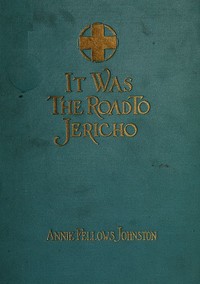
It Was the Road to Jericho — Text and Context
(7 User reviews)
2108
Project Gutenberg
2012
Not confirmed
World War, 1914-1918 -- Poetry; Good Samaritan (Parable) -- Poetry
Readers of public-domain and historical texts
Project Gutenberg digital edition
en
Edition facts
Words
3,732
Reading time
17 min
Text sections
1
It Was the Road to Jericho — Text and Context can be approached with a clearer sense of reading commitment from its source measurements: 3,732 words, 17 min estimated reading time, and 1 detected text section.
The text analysis averages about 23.9 words per sentence, while the detected sections provide another way to judge how the source is divided.
Project Gutenberg metadata also associates the work with “World War, 1914-1918 -- Poetry,” connecting these edition facts with the source record’s subject description.
Source:
Project Gutenberg record #40462
Annie F. Johnston's 1919 poem retells the Good Samaritan parable as a World War I allegory, using stark diction and repeated imagery of blood, wounds, and the cross to connect ancient mercy to modern sacrifice.
Editorial Edition Score
4.4/5
★★★★★
★★★★★
Calculated from edition completeness, EPUB availability, text structure and catalogue metadata. Not a user rating.
How this score is calculated
- Description quality20 pts
- Title & short description10 pts
- Source metadata20 pts
- Text length15 pts
- Chapters / structure15 pts
- EPUB file integrity20 pts
Total of 100 points, scaled to a 2.5-5.0 range. Editions with an empty description or a missing EPUB file are not scored.
Edition quality
Read the Text
Produced by David Edwards, Emmy and the Online Distributed Proofreading Team at http://www.pgdp.net (This file was produced from images generously made available by The Internet Archive)
It was the Road to Jericho
It was the Road to Jericho
By Annie Fellows Johnston
Author of The Little Colonel· The Desert of Waiting· Etc.
ILLUSTRATED BY JOHN R NEILL
NEW YORK BRITTON PUBLISHING COMPANY
Copyright 1919 by Annie Fellows Johnston
It Was the Road to Jericho
It was the road to Jericho, And brave indeed the man Who went alone and waited not To join the caravan.
For robber hoards swooped down the cliffs Like eagles on their prey, And mercy was not known to them, Theirs but to kill and slay.
Along the road to Jericho A man went riding by, He heard a groan of mortal pain, He heard a piercing cry.
He got him down from off his beast, He found the one who bled, The thieves had bruised and beaten him And left him well nigh dead.
(The Levite and the priest had passed, The calls to them were vain). He bound his wounds. With oil and wine He eased the grevious pain.
Then to the inn he carried him And paid the keeper's price, As one who does a deed for love, Nor counts it sacrifice.
Lo, as he passed upon his way, His robe it showed a stain-- Two red marks on his white sleeve, where The bleeding head had lain.
One, made in pity when he stooped To lift the wounded up, The other, when in love he bent To offer him the cup.
Two red, red lines which made a cross, And marked him as the man Whose name is, till the end of time "The good Samaritan."
The World pressed toward its Jericho, The goal of its desire-- Its marts, its pleasures and its shrines Its dreams of great empire.
A hoard of gold it bore along To barter and to buy. But on the road, by thieves beset, It, too, was left to die.
The Son of God came down that way To succour and to save, To bind its wounds, to heal its sin To lift it from the grave.
Lo! He too, went upon His way When He had paid the price. Marked by the red red lines that make The Cross of Sacrifice.
Where all the woe of all the world Upon His heart had lain And all the sin of earth pressed sore There gleamed that double stain.
And now we cannot name His name Who is the Lord of Heaven, Without a thought of that symbol By love and pity given.
Now onward to our Jericho We press with bated breath. For evil grows the way, and dark. On every hand stalks death.
The robber hoards that strip and slay Take more than gold, forsooth, They kill our holiest of Hopes-- They take all Love--all Youth!
They smite the mother and the maid-- The babe that cries unfed, And little children, sore afraid Sob in the night for bread.
Oh, who shall staunch such world-wide woe-- Such universe of pain? And who has oil and wine enough? And must they cry in vain?
Nay! On the road to Jericho There be a million now, Who bear Christ's pity in their hearts, His sign upon their brow.
And millions more shall follow them To bind and to restore. Till all the highway is made safe And war shall be no more.
Now God give grace to all who hear And may His love suffice To blaze upon each heart each day The Cross of Sacrifice.
Obvious punctuation repaired.
The original text spelled "grievous" as "grevious." This was retained so as to not change the poem's meter.
The original text had the contraction for "it is" (it's) in place of every possessive "its." This was corrected.
End of the Project Gutenberg EBook of It Was the Road to Jericho, by Annie Fellows Johnston
Annie F. Johnston's It Was the Road to Jericho (1919) is a narrative poem that recasts the Good Samaritan parable as an allegory for World War I. The poem opens with a lone traveler on the perilous road, where "robber hoards swooped down the cliffs / Like eagles on their prey." Johnston's diction is direct and physical: the Samaritan binds wounds "with oil and wine" and carries the injured man to an inn. The poem then shifts to a second part, where "the World pressed toward its Jericho"—its ambitions and desires—and is left "by thieves beset." The Son of God becomes the new Samaritan, marked by "the red red lines that make / The Cross of Sacrifice." Johnston's voice is unadorned, relying on repetition and stark imagery rather than ornamentation.
Diction and the Physicality of Mercy
Johnston's word choices emphasize bodily action and material detail. The Samaritan "got him down from off his beast" and "found the one who bled." The verbs are concrete: stoop, lift, bind, carry. The wounds are described with tactile specificity: "bruised and beaten," "well nigh dead." The oil and wine are not symbolic abstractions but practical remedies. This physicality extends to the stain left on the Samaritan's sleeve—"two red marks" where the bleeding head had lain. Johnston does not spiritualize the act; she grounds it in the mess of contact. The repetition of "red, red lines" in both parts of the poem ties the Samaritan's compassion to Christ's crucifixion through a shared, visceral image.
Structure as a Two-Part Allegory
The poem is divided into three parts, but the first two form a clear parallel. Part I retells the parable in eight stanzas, ending with the Samaritan marked by the cross-shaped stains. Part II opens with "The World pressed toward its Jericho" and follows the same narrative arc: the world is robbed and left for dead, then rescued by the Son of God, who also bears the double stain. The third part shifts to a collective plea: "Oh, who shall staunch such world-wide woe— / Such universe of pain?" The answer is a "million now" who carry Christ's pity. This structural repetition reinforces the idea that the ancient story is reenacted in the present war, with the same pattern of violence and mercy.
The Shift from Individual to Collective
In Part I, the Samaritan acts alone: "He got him down from off his beast, / He found the one who bled." The pronouns are singular, the action solitary. By Part III, the response becomes communal: "There be a million now, / Who bear Christ's pity in their hearts." The poem moves from one man's deed to a multitude. The final stanza is a prayer: "Now God give grace to all who hear." This expansion mirrors the scale of World War I, where individual sacrifice was multiplied across nations. Johnston does not name specific battles or leaders; instead, she universalizes the Samaritan's role, making every compassionate act a participation in the original parable.
Repetition and the Cross Motif
The most striking formal feature is the repeated image of the "two red marks" that form a cross. In Part I, the stain appears on the Samaritan's sleeve; in Part II, it becomes "the Cross of Sacrifice." The phrase "red red lines" recurs verbatim, linking the two figures. Johnston also repeats key words: "Jericho" appears in every part, anchoring the poem to its biblical source. The word "road" is used six times, emphasizing the journey as a central metaphor. This repetition gives the poem a liturgical quality, as if the reader is meant to recite and remember. The cross motif is not explained but presented as an emblem that connects the Samaritan's love to Christ's atonement.
Johnston's poem is best read aloud, its regular meter and rhyme lending themselves to oral performance. The brevity of the work—under 4,000 words—invites multiple readings to trace the parallels between the parable and the war allegory. Pay attention to how the same words shift in meaning across the three parts: the road, the stain, the act of binding. The poem does not argue a thesis; it presents a pattern and asks the reader to see the connection.
Reading the blood-soaked road again, I remembered the First World War, and my grandfather's empty chair. Somehow, It Was the Road to Jericho makes ancient mercy feel like a trench lit by a single lantern. Then I recalled a quieter story, How Rifleman Brown Came to Valhalla — Background and Themes, and felt the same ache—mercy arriving too late, yet still somehow holy.
Jack Young
2 weeks ago-

Timothy Long - 1 month ago
It Was The Road To Jericho had a promising premise but execution faltered. The characters are unrelatable, and their motivations unclear. The plot drags in numerous philosophical tangents, losing focus. The biblical allegory feels forced, and the dialogue is stilted. I struggled to finish it, ultimately finding it dull and pretentious. Not recommended for those seeking a compelling narrative. -
Gabriella Preston - 1 month ago
It Was The Road To Jericho is a powerful and evocative novel that explores themes of redemption, faith, and human frailty. The story unfolds in the atmospheric setting of the desert, mirroring the characters' spiritual journeys. The prose is lyrical, and the dialogue feels authentic. The plot is both gripping and thought-provoking, with twists that keep you engaged. The author's ability to weave biblical references into a modern narrative is masterful. A profound reading experience that I highly recommend. -
Ashley Oconnell - 2 weeks ago
This book offers a compelling story with rich symbolism and well-developed characters. The desert setting is vividly described, and the narrative moves at a decent pace. However, some sections delve too deeply into philosophical musings, which can slow the story. The ending resolves quickly, leaving certain subplots unexplored. Overall, it's a good read for those who enjoy literary fiction with religious undertones.
Reader reflection
Before you leave, reflect on the book
Use these questions to collect your thoughts before moving on.
Your progress
0
/
10
2
What was your overall reaction to the book?
3
Would you recommend this book to another reader?
4
What was the reading difficulty like?
5
Did it raise ideas you would like to talk about?
6
Was the book moving at the right speed?
7
Which element worked best for you?
8
How well did it match your expectations?
9
Which lesson or insight stayed with you?
10
Camila Lewis
2 weeks ago