About 83 minutes
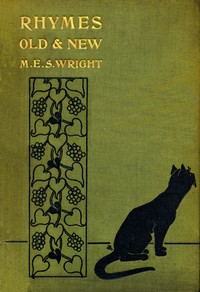
Rhymes Old and New : collected by M.E.S. Wright — Text and Context
Fantasy Juvenile Worlds
18,992 recorded words. 4 minutes difference from this book's estimate.
View Gutenberg source #30426
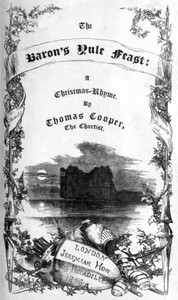
The Baron's Yule Feast: A Christmas Rhyme — Background and Themes can be approached with a clearer sense of reading commitment from its source measurements: 19,968 words, 1 hr 27 min estimated reading time, and 4 detected text sections.
The text analysis averages about 24.3 words per sentence, while the detected sections provide another way to judge how the source is divided.
Project Gutenberg metadata also associates the work with “Christmas -- Poetry,” connecting these edition facts with the source record’s subject description.
Explore this collection
These alternatives are selected using recorded categories and estimated reading time.
About 83 minutes
Fantasy Juvenile Worlds
18,992 recorded words. 4 minutes difference from this book's estimate.
View Gutenberg source #30426About 76 minutes
Fantasy Juvenile Worlds
17,348 recorded words. 11 minutes difference from this book's estimate.
View Gutenberg source #49684About 72 minutes
Fantasy Juvenile Worlds
16,523 recorded words. 15 minutes difference from this book's estimate.
View Gutenberg source #50509Search stored excerpts and compare books → Choose by your preferences →
Choices use stored catalog measurements. Estimates vary with reading speed. A shared category is a catalog label, not a claim that two books have the same argument or literary quality.
Search reads excerpt text stored with this catalog and links to its associated Gutenberg record. The connection is stored in the site database; this tool does not recheck that every excerpt is word-for-word identical to that external record. Excerpt search does not cover every chapter and does not verify historical publication dates.
Catalog snapshot checked: 2026-09-26. Coverage: 90 public books, 90 available source excerpts.
Calculated from edition completeness, EPUB availability, text structure and catalogue metadata. Not a user rating.
Total of 100 points, scaled to a 2.5-5.0 range. Editions with an empty description or a missing EPUB file are not scored.
Public-domain source text
The source text is kept in the dedicated reader, separate from this catalogue record and its commentary.
The poem opens with a vivid contrast: the ruined Torksey Hall, mirrored in the Trent, summons 'weird-wrought visions vast' of armored barons and fair ladies on palfreys. Cooper immediately establishes a tension between decay and pageantry, past and present, as the 'mouldering wall' and 'shorn' turret give way to a 'full pageant bright.' This framing device—a ruin that conjures spectral history—sets the stage for a narrative that oscillates between tragic romance and bawdy comedy.
The second canto introduces a Palmer who beguiles the lady Gertrude with 'silken measures' and 'goodly ditties,' winning her trust while Sir Raymond De Clifford is absent. The Palmer's smooth tongue contrasts with the knight's later fury. When De Clifford returns, he stabs the Palmer at the altar, and Gertrude dies of fright. The scene is abrupt and violent: 'With a scream of terror, Gertrude fell— / For she knew the pride of Sir Raymond well!' Cooper uses the Palmer as a figure of false piety and charm, a stock character whose betrayal triggers a double death. The canto ends with a plea for Sir Raymond's soul, underscoring the moral weight of the tragedy.
After the minstrel's 'piteous tale,' the tone shifts sharply. The baron calls for a song from Swithin, a gosherd from Croyland fen, whose 'halting ditty' about a lost gander provokes laughter. The gosherd's search through 'marshy wild remote' and his fear of the 'bittern's boom' parody the earlier romantic quest. Cooper juxtaposes high and low: the baron jests that Swithin 'look'st so like a knowing fowl,' and the crowd finds the lame rhyme and dull joke amusing. This section demonstrates the poem's range, from tragic pathos to rustic humor, and its grounding in Lincolnshire fenland life.
Cooper's advertisement acknowledges his debt to Coleridge's 'Christabel,' and the poem's meter reflects that influence: irregular line lengths, varied rhyme schemes, and a ballad-like cadence. The opening lines use a six-line stanza (ababcc), while the Palmer's tale shifts to couplets and the gosherd's song adopts a simpler quatrain. The poet also employs archaic diction ('wight,' 'nieve,' 'loffe') and dialect ('goosish men') to evoke a medieval setting. These metrical choices create a patchwork effect, mirroring the poem's blend of ghostly vision, romance, and folk comedy.
Readers should note that the excerpts cover only the first and fourth cantos, with the Palmer's story appearing in the second. The complete work likely contains additional songs and narrative turns. Cooper's self-deprecating apology—calling the poem 'imperfect and immature pieces'—invites a forgiving reading. The notes he mentions may illuminate the local associations of his boyhood, adding another layer to this Christmas entertainment.
There’s a particular ache in Cooper’s ruined Torksey Hall—the way a merry song lingers after the fire’s gone cold. It reminded me of evenings spent with older collections, where forgotten voices gather quietly. I found that same gentle sorrow and stubborn warmth again in Rhymes Old and New : collected by M.E.S. Wright — Text and Context, as if those pages, too, knew how to hold a December memory without letting it fade entirely.
Capture what you thought, learned, and would like to remember.