About 360 minutes
The Vision and Creed of Piers Ploughman, Volume 2 — Reading Notes
Historical Psychological Social Fiction
82,610 recorded words. 11 minutes difference from this book's estimate.
View Gutenberg source #43661
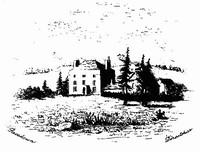
Before opening The Poetical Works of William Wordsworth — Volume 4 (of 8) — Reading Companion, the edition data offers a quick orientation: 80,142 words, 5 hr 49 min estimated reading time, and 27 detected text sections.
The text analysis averages about 22.3 words per sentence, while the detected sections provide another way to judge how the source is divided.
Project Gutenberg metadata also associates the work with “English poetry -- 19th century,” connecting these edition facts with the source record’s subject description.
Explore this collection
These alternatives are selected using recorded categories and estimated reading time.
About 360 minutes
Historical Psychological Social Fiction
82,610 recorded words. 11 minutes difference from this book's estimate.
View Gutenberg source #43661About 187 minutes
Historical Psychological Social Fiction
42,882 recorded words. 162 minutes difference from this book's estimate.
View Gutenberg source #29879About 177 minutes
Historical Psychological Social Fiction
40,601 recorded words. 172 minutes difference from this book's estimate.
View Gutenberg source #38011Search stored excerpts and compare books → Choose by your preferences →
Choices use stored catalog measurements. Estimates vary with reading speed. A shared category is a catalog label, not a claim that two books have the same argument or literary quality.
Search reads excerpt text stored with this catalog and links to its associated Gutenberg record. The connection is stored in the site database; this tool does not recheck that every excerpt is word-for-word identical to that external record. Excerpt search does not cover every chapter and does not verify historical publication dates.
Catalog snapshot checked: 2026-09-26. Coverage: 90 public books, 90 available source excerpts.
Calculated from edition completeness, EPUB availability, text structure and catalogue metadata. Not a user rating.
Total of 100 points, scaled to a 2.5-5.0 range. Editions with an empty description or a missing EPUB file are not scored.
Public-domain source text
The source text is kept in the dedicated reader, separate from this catalogue record and its commentary.
This fourth volume of William Wordsworth's poetical works, edited by William Angus Knight, covers poems written between 1806 and 1808, a period of intense creativity and personal loss. The collection includes the substantial narrative poem 'The White Doe of Rylstone,' along with sonnets on political events, lyrics of domestic life, and meditations on nature. Knight's edition preserves the original line numbering and footnotes, allowing readers to trace Wordsworth's revisions and the evolution of his poetic voice across different modes—from the stately, measured pace of the narrative to the compressed energy of the sonnets.
The poems in this volume exhibit notable changes in pace and narrative voice. In 'The White Doe of Rylstone,' Wordsworth employs a slow, deliberate rhythm, with long lines and frequent enjambment that mirror the protagonist Emily's 'stern and rigorous melancholy.' The opening stanzas describe a ruined landscape in a measured, almost stately tone: 'Pools, terraces, and walks are sown / With weeds; the bowers are overthrown.' This gradual unfolding contrasts sharply with the sudden, dramatic appearance of the doe, introduced 'with a noise like distant thunder.' The shift in pace—from static ruin to dynamic encounter—highlights the poem's central tension between loss and renewal.
In contrast, the sonnets of 1807–1808, such as 'The world is too much with us; late and soon' and 'With Ships the sea was sprinkled far and nigh,' display a compressed, urgent voice. Wordsworth's syntax becomes tighter, his imagery more concentrated, as he grapples with political and personal themes. The sonnet form forces a rapid progression of thought, creating a sense of immediacy absent from the longer narrative. This juxtaposition of pace—the slow, cumulative weight of 'The White Doe' against the swift, pointed sonnets—reveals Wordsworth's versatility in modulating tempo to suit subject and mood.
'The White Doe of Rylstone,' the longest poem in this volume, is a narrative of loss and endurance. The excerpt presents Emily as a 'joyless human Being' seated on a 'primrose bank, her throne / Of quietness,' a figure of solitary grief. The doe, described as 'a radiant creature, silver-bright,' approaches her with 'a look of pure benignity,' prompting a flood of tears. This encounter is framed as a 'precious greeting' and a 'fruitful meeting,' suggesting a symbolic reunion between the human and natural worlds.
Wordsworth's narrative voice here is notably restrained, avoiding overt moralizing. The doe's arrival is presented as a 'wonder,' yet the poem does not explain its significance; instead, the reader is left to interpret the 'speaking face' of the creature. The language oscillates between concrete description—'A vest with woollen cincture tied, / A hood of mountain-wool undyed'—and abstract reflection on 'memory of the past / And strength of Reason.' This interplay between the physical and the spiritual is characteristic of Wordsworth's mature style, and the narrative's slow, deliberate pace allows these elements to resonate.
The sonnets from 1807–1808 in this volume engage directly with contemporary political events, yet they also reveal a deeply personal voice. 'To Thomas Clarkson, on the final passing of the Bill for the Abolition of the Slave Trade, March, 1807' is a public tribute, while 'Thought of a Briton on the Subjugation of Switzerland' laments lost liberty. These poems share a tone of moral urgency, but their pace differs: the Clarkson sonnet builds toward a climactic 'Hail to the great event!' while the Swiss sonnet ends on a note of bitter resignation.
Alongside these political pieces, Wordsworth includes sonnets on sleep, the moon, and the 'mountain Echo,' which turn inward. 'Nuns fret not at their convent's narrow room' defends the sonnet form itself as a source of freedom within constraint. This self-reflexive quality, combined with the shift from public to private subjects, demonstrates Wordsworth's ability to adapt his voice to different registers. The editor's footnotes, which record variant readings, further illuminate how Wordsworth revised these poems, often tightening their language to achieve greater precision and emotional force.
Readers approaching this volume will benefit from attending to the interplay between the longer narrative and the shorter lyric forms. The editor's notes, which preserve Wordsworth's own revisions and comments, offer a window into the poet's creative process. Comparing the stately movement of 'The White Doe of Rylstone' with the compressed energy of the sonnets reveals how Wordsworth tailored his voice to different poetic tasks, from public commemoration to private meditation. This volume thus provides a rich field for studying the relationship between form, pace, and meaning in Wordsworth's work.
I have long kept Wordsworth's 1806–1808 volume close, watching his private grief weave through public sonnets, his pacing like a quiet walk that turns sudden. There is a measured art in such restraint, a patience with what words can hold. The The Art of Politicks — Edition Insights murmurs something similar, though in a different tongue—old companions, each understanding the other's silences.
Build a private reading journal entry for this title.