1

A Tree with a Bird in it: A Symposium of Contemporary American Poets on Being Shown a Pear-tree on Which Sat a Grackle — Reading Notes
(11 User reviews)
1627
Project Gutenberg
2011
Not confirmed
Parodies; American poetry -- 20th century
Readers of public-domain and historical texts
Project Gutenberg digital edition
en
Edition facts
Words
11,795
Reading time
52 min
Text sections
3
For A Tree with a Bird in it: A Symposium of Contemporary American Poets on Being Shown a Pear-tree on Which Sat a Grackle — Reading Notes, the stored edition analysis reports 11,795 words, 52 min estimated reading time, and 3 detected text sections.
The text analysis averages about 20.4 words per sentence, while the detected sections provide another way to judge how the source is divided.
Project Gutenberg metadata also associates the work with “Parodies,” connecting these edition facts with the source record’s subject description.
Source:
Project Gutenberg record #36831
A 1922 parody collection in which Margaret Widdemer imagines 40+ American poets each composing a poem about a grackle in a pear tree, mimicking their distinctive styles, voices, and preoccupations with sharp humor.
Editorial Edition Score
4.5/5
★★★★★
★★★★★
Calculated from edition completeness, EPUB availability, text structure and catalogue metadata. Not a user rating.
How this score is calculated
- Description quality20 pts
- Title & short description10 pts
- Source metadata20 pts
- Text length15 pts
- Chapters / structure15 pts
- EPUB file integrity20 pts
Total of 100 points, scaled to a 2.5-5.0 range. Editions with an empty description or a missing EPUB file are not scored.
Edition quality
Read the Text
That was a bird I heard say glunk As I walked statelily through my extensive, expensive English country estate In a pink brocade with silver buttons, a purple passementerie cut with panniers, a train, and faced with watered silk:
But it Is dead now! (The bird) Probably putrescent And green....
I scrabble my toes ... Glunk!
(Making a statement which you may take or leave, but convincing you entirely.)
I was a shock-headed boy bringing in the laundry; Why did I try for that damn bird, anyway? I suppose I had been in the habit of aiming for the pears. But I chucked a stone, anyhow, And it ricocheted and hit my head, And as it hadn't any brains inside the stone busted it And there I was, dead. And dead with me were all the improper things I'd got out of the servants about their employers Bringing in the laundry; But the grackle sings on. Sing forever, O grackle! I died, knowing lots of things _you_ don't know!
_Edwin Arlington Robinson_
(He mutters wearily in an undertone.)
Well, they're quite dead, Rambuncto; thoroughly dead. It was a natural thing enough; my eyes Stared baffled down the forest-aisles, brown and green, Not learning what the marks were. Still, who learns? Not I, who stooped and picked the things that day, Scarlet and gold and smooth, friend ... smooth enough! And she's in a vault now, old Jane Fotheringham, My mother-in-law; and my wife's seven aunts, And that cursed bird that used to sit and croak Upon their pear-tree--they threw scraps to him-- My wife, too. Lord, that was a curious thing! Because--"I don't like mushrooms much," I said, And they ate all I picked. And then they died. But ... Well, who knows it isn't better that way? It's quieter, at least.... Rambuncto--friend-- Why, you're not going?... Well--it's a stupid year, And the world's very useless.... Sorry.... Still The dusk intransience that I much prefer Leaves place for little hope and less regret. I don't suppose he'd care, to stay to dine Under the circumstances.... What's life for?
(Rather nervously, retreating with haste in the wake of Mr. Robinson as soon as he had finished.)
THE BIRD MISUNDERSTOOD
There was a grackle sat on our old pear tree-- Don't ask me why--I never did really know; But he made my wife and me feel, for really the very first time We were out in the actual country, hindering things to grow;
It gave us rather a queer feeling to hear the grackle grackle, But when it got to be winter time he got up and went thence And now we shall never know, though we watch the tree till April, Whether his curious crying ever made song or sense.
(Striking from time to time a few notes on a mouth-organ, with a wonderful effect of human brotherhood which does not quite include the East.)
Grackles, trees-- I been thinkin' 'bout 'em all: I been thinkin' they're all right: Nothin' much--Gosh, nothin' much against God, even. _God made little apples_, a hobo sang in Kankakee, Shattered apples, I picked you up under a tree, red wormy apples, I ate you.... That lets God out. There were three green birds on the tree, there were three wailing cats against a green dawn.... 'Gene Field sang, "The world is full of a number of things," 'Gene Field said, "When they caught me I was living in a tree...." 'Gene Field said everything in Chicago of the eighties. Now he's dead, I say things, say 'em well, too.... 'Gene Field ... back in the lost days, back in the eighties, Singing, colyumning ... 'Gene Field ... forgotten ... Back in Arkansaw there was a green bird, too, I can remember how he sang, back in the lost days, back in the eighties. Uncle Yon Swenson under the tree chewing slowly, slowly.... Memories, memories! There are only trees now, no 'Gene, no eighties Gray cats, I can feel your fur in my heart ... Green grackle, I remember now, Back in the lost days, back in the eighties The cat ate you.
(She tells a friend in confidence, after she is safely out of it all.)
FROST AND SANDBURG TONIGHT
Apple green bird on a wooden bough, And the brazen sound of a long, loud row, And "Child, take the train, but mind what you do-- Frost, tonight, and Sandburg too!"
Then I sally forth, half wild, half cowed, Till I come to the surging, impervious crowd, The wine-filled, the temperance, the sober, the pied, The Poets that cover the countryside!
The Poets I never would meet till tonight! A gleam of their eyes in the fading light, And I took them all in--the enormous throng-- And with one great bound I bolted along.
Margaret Widdemer’s 1922 volume is a sustained act of literary mimicry: a symposium of forty-odd American poets, each asked to write a poem about a grackle perched in a pear tree. The conceit is simple, but the execution is precise. Widdemer captures not only the surface mannerisms of her subjects—their diction, line lengths, and favored images—but also the deeper habits of mind that make a poet recognizable. The result is less a collection of jokes than a series of compressed portraits, each poem a kind of caricature that reveals something true about its target.
The book’s structure mirrors the event it describes: a gathering of poets, each taking a turn. The foreword sets the scene with a deadpan account of a real pear tree and a real grackle, and the poems follow in sequence, punctuated by brief, often wry stage directions. The movement between poems is part of the pleasure, as Widdemer shifts from Amy Lowell’s free-verse impressionism to Edgar Guest’s earnest optimism to Don Marquis’s boozy columnar banter.
The Symposium as Structure
The book’s organizing principle is the symposium—a formal gathering of poets, each contributing a poem on a single subject. Widdemer leans into this conceit with a foreword that explains the occasion: she lived in a house with a pear tree, a grackle took up residence, and she invited members of the Poetry Society of America to compose verses under its branches. The poems are then presented in sequence, with the poet’s name as a heading and, in many cases, a brief editorial note in parentheses—for example, “William Griffith (Who felt for her.)” or “Edgar Guest (Who has an air of absolute belief in the True, the Optimistic, and the Checkbook.).” These asides function as stage directions, guiding the reader’s response and reinforcing the sense of a live performance. The structure creates a rhythm of anticipation: each new poet brings a new voice, and the reader watches for how the grackle and pear tree will be transformed.
Recurring Images and Their Transformations
The grackle and pear tree are the book’s fixed points, but they appear in wildly different guises. In Jessie B. Rittenhouse’s “Resignation,” the bird is a symbol of quiet endurance; in Edwin Markham’s “The Bird with the Woe,” it becomes a figure of tragic burden. Amy Lowell’s “Oiseaurie” treats it as an object of imagist perception, while Edgar Lee Masters’ “Imri Swazey” gives it a Spoon River backstory. The pear tree itself shifts from a literal tree to a metaphor for rootedness, memory, or artistic constraint. Widdemer’s own contribution, “The Sighing Tree,” leans into a sentimental, lyrical mode. The recurrence of these two images across forty poems creates a kind of fugue: the same elements are recombined, and the reader’s attention is drawn to what each poet chooses to emphasize or ignore. The grackle’s greenness, its harsh call, its position in the tree—these details are picked up, dropped, and transformed.
Movement Between Voices
The book’s pleasure lies in the rapid shifts between poets. A sequence might move from the earnest moralizing of Edwin Markham to the playful abstraction of Witter Bynner to the imagist precision of Amy Lowell. The transitions are abrupt, and Widdemer often uses the editorial notes to heighten the contrast. After Edgar Guest’s cheerful platitudes, Don Marquis’s “The Meeting of the Columns” bursts in with a boozy, self-referential energy, complete with references to newspaper columns and drinking. Christopher Morley’s “The Mocking-Hoarse Bird” follows, adopting a genial, conversational tone that contrasts with Marquis’s rowdiness. The effect is like channel-surfing through a literary party: each poem is a snapshot of a distinct personality. The reader is invited to recognize the poets, to compare their approaches, and to enjoy the sheer variety of ways a single subject can be handled. The movement between voices also underscores the book’s central joke: that a grackle in a pear tree is a pretext for poets to write about themselves.
The Role of the Illustrations
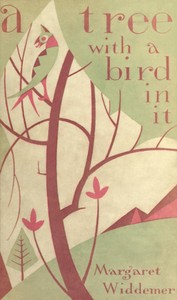
William Saphier’s illustrations punctuate the text, though only a few are visible in the excerpts. The title page and table of contents suggest that each poem is accompanied by a drawing. The illustrations likely reinforce the book’s playful tone, providing visual counterparts to the verbal parodies. In the excerpts, the illustrations are not described, but their presence is implied by the credit line and the book’s design. The combination of text and image was common in 1920s humor books, and Saphier’s style—based on the period’s fashion for whimsical line drawings—probably complements Widdemer’s light touch. The illustrations also serve a structural function: they break up the sequence of poems, giving the reader a visual pause between voices. Without seeing them, one can infer that they likely depict the grackle, the pear tree, and the poets themselves in various comic situations, adding another layer of parody to the enterprise.
Widdemer’s symposium is best read as a series of quick, knowing sketches. The poems reward familiarity with the poets being parodied, but they also work as independent comic pieces. The book’s structure—a sequence of voices, each distinct—invites the reader to move through it in order, savoring the contrasts. The grackle and pear tree are the thread that holds it together, but the real subject is the poets themselves: their habits, their tics, their ways of seeing. A reader who knows the originals will find the parodies sharper; a reader who does not will still enjoy the variety of styles and the book’s good-natured wit.
The rain kept up its steady drumming while I laughed through Margaret Widdemer’s pear-tree grackle, admiring how faithfully she caught each poet’s tick. Her gentle mimicry made me wonder about the real thing beneath the parody, and by evening I was turning pages of a quieter voice, one that found its own raw music in the shell-bursts of war. Over the Brazier — Key Ideas to Explore felt like finding the original photograph after studying a clever cartoon.
Lucas Rodriguez
3 weeks agoMia Harris
1 month agoCarter Adams
3 weeks agoTheodore Allen
1 month agoThere are no comments for this eBook.
Reader reflection
Record your reading impressions
A brief reflection can help important ideas stay with you longer.
Your progress
0
/
10
2
How did the book work for you overall?
3
How likely are you to recommend this book?
4
How easy was the book to follow?
5
Did the book offer a fresh perspective?
6
Is this a title worth rereading?
7
Would you like to discuss this book with someone?
8
Did any part of the book feel personally relevant?
9
What changed or sharpened your thinking?
10
Sebastian Perez
4 weeks ago